

Why Bats Deserve the Spotlight: Your Night-Flying Allies
Twilight Wonders
Picture the first shade of dusk settling over a summer sky. A flicker of wings darts above the treetops, gone in an eye-blink, yet destined to devour hundreds of moths before sunrise. What if that “spooky” shape was actually your garden’s secret guardian, the unseen farmhand who saves growers billions, and the pollinator behind every celebratory margarita? By the time you finish this read, you’ll understand why bats are the planet’s second-largest group of mammals, how their nightly shifts keep ecosystems humming, and, perhaps most important, how you can give something back during Bat Month.
Meet Chiroptera: Bigger Than You Think
Bats don’t just squeak around the edges of the mammal family tree; they own an entire branch. More than 1,400 species, roughly one in every five mammal species on Earth belong to the order Chiroptera Definition: The scientific order of mammals commonly known as bats, distinguished by their forelimbs adapted as wings for true powered flight. [Order | Mammalia] The only mammals capable of true... More, second only to rodents in sheer diversity. They inhabit every continent except Antarctica and a handful of remote islands. Some weigh less than a paperclip, others stretch nearly six feet wingtip-to-wingtip. All share an extraordinary anatomical signature: wings built from lengthened fingers sheathed in a thin, flexible membrane.
Within Chiroptera scientists once spoke simply of “megabats” (the fruit-loving flying foxes) and “microbats” (the insect-eaters that dominate temperate skies). New genetics now groups them into Yinpterochiroptera and Yangochiroptera, but for the curious observer, the classic split still paints a practical picture: big-eyed nectar sippers versus stealthy echolocators.
Built for the Night: Three Superpowers
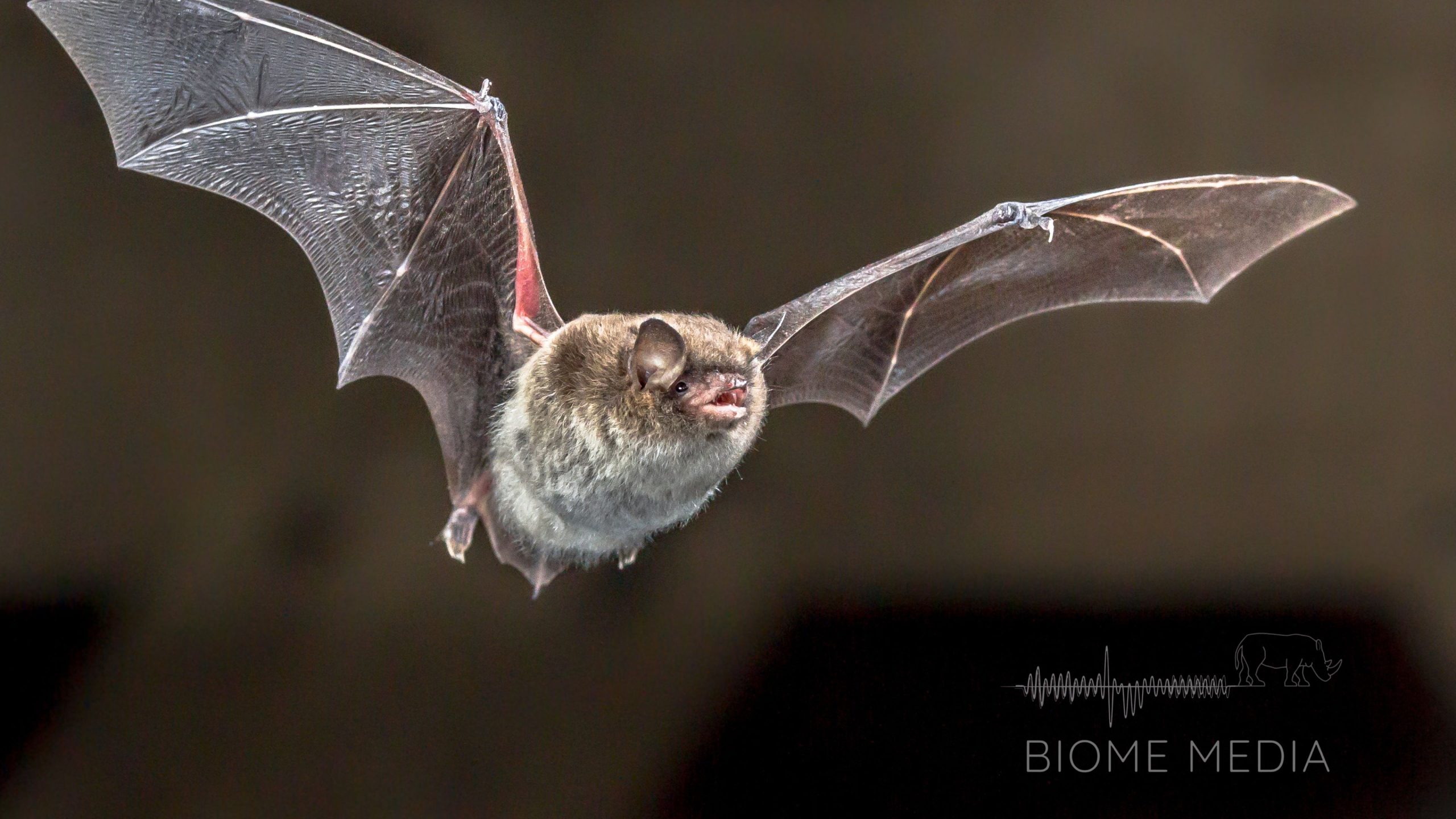
- Powered Flight – Bats are the only mammals to achieve sustained, flapping flight. Their flexible “finger sails” allow mid-air pivots birds can’t match, letting a Brazilian free-tailed bat rocket through level flight at 99 mph (160 km/h), the current vertebrate speed record.
- Echolocation
 Definition: A biological sonar in which an animal emits sound waves and interprets the returning echoes to determine the location, size, shape, and movement of objects in its environment. Exploration... More – Most species layer sound upon flight, emitting ultrasonic clicks that ricochet off insects in a thousandth of a second. Imagine mapping an entire room with each breath you takethat’s a bat’s nightly reality.
- Longevity in Miniature – A mouse-sized Brandt’s bat can survive three decades, far outliving a cow by body-weight standards. The secret may lie in DNA repair tricks scientists are only beginning to decode.

Ecosystem MVPs
Natural Pest Patrol – A single summer colony of half a million bats in Texas can consume more than two billion insects in a night, saving U.S. agriculture an estimated US $3.7–53 billion annually in avoided crop damage and pesticide use.
Night-Shift Pollinators – If you enjoy tequila or mezcal, thank a bat. The lesser long-nosed bat and its cousins are the principal pollinators of blue agave, swooping in when desert blossoms open after dark. They also service bananas, avocados, and at least 500 other plant species worldwide.
Forest Re-Growers – Fruit-eating flying foxes wing seeds across cleared gaps and burned hillsides, sometimes dispersing more than a thousand seeds each night—re-seeding tropical forests one silent flight at a time.
Guano Gold – Bat droppings aren’t just cave décor. Rich in nitrogen, phosphorus, and potassium, guano has nourished traditional farms from Texas to Thailand and underpins entire cave ecosystems of unique invertebrates.
Bats & Us: Myths, Health
From Dracula lore to Halloween props, bats carry baggage. Yet the data flip the narrative: healthy bat populations reduce disease risk by thinning mosquito swarms, and less pesticide drift means cleaner water for everyone. Rabies remains exceedingly rare (fewer than two human cases per year in North America), while the economic upside, pest control, pollination, eco-tourism, runs in the tens of billions. The bottom line: coexistence is enlightened self-interest.
Under Threat
White-Nose Syndrome Since 2006, this cold-loving fungus has killed millions of hibernating bats across 12 confirmed North American species, pushing some (like the northern long-eared bat) toward endangered status.
Habitat Loss & Light Pollution Roost-friendly snags and cave entrances disappear under development, while LED glare disorients insect prey and shortens feeding time.
Wind Turbines Green energy, yes, but poorly sited turbines draw migrating bats into lethal low-pressure zones behind spinning blades.
The Biome Newsletter
Don’t miss a single article! Sign up for the Newsletter now!
How to Help During Bat Month
| Action | Time Investment | Impact | Quick Start |
|---|---|---|---|
| Install a Bat House | Weekend DIY | Provides summer nursery space for 100–300 bats | Watch for our upcoming build guide |
| Plant Night-Bloomers | One afternoon of gardening | Nectar buffet for pollinator bats | Choose native jasmine, evening primrose, or datura |
| Join Citizen Science | 5 min to log a sighting | Crucial population data | Apps: iNaturalist, Bat Detective |
| Share the Story | Instant | Multiplies awareness | Repost this article with #BiomeBatMonth |
Even a single action can ripple outward. A bat house in your yard might spare a nearby farmer countless moth-eaten leaves; a social-media share can dispel a neighbor’s fear..

Tonight, when the last glint of sunset fades and the air feels alive with hidden wings, look up. Somewhere overhead, a bat is protecting your garden, pollinating tomorrow’s fruit, and sketching a story of resilience against the stars. Will you cheer on nature’s tiniest night guards—or better yet, lend them a hand?
From Curiosity to Conservation What is Conservation Definition of Conservation Conservation refers to the practice of protecting, preserving, and managing natural resources and the environment. This discipline focuses on maintaining the natural balance of... More, every small action echoes. Happy Bat Month!


